BackgroundIncludes press-layer reports
- Event date (announced)
- Published
- Last updated
Background This event is more than 90 days older than this page. It is kept here as dated context, not as current news.
What changed
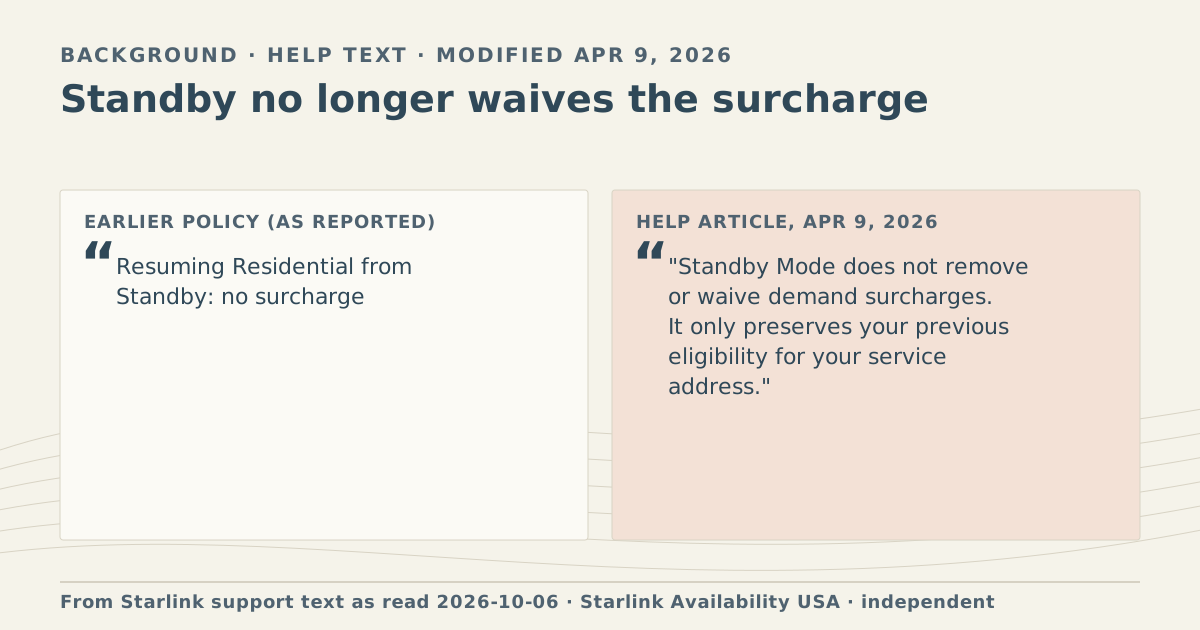
Starlink’s help article “What is a demand surcharge?” was modified on April 9, 2026, according to the help center’s own data. The current text, which we read on October 6, 2026, says:
“Standby Mode does not remove or waive demand surcharges. It only preserves your previous eligibility for your service address.”
RV Mobile Internet reported the change the same day and described the earlier policy: resuming Residential service from Standby used to come without a surcharge. Its summary: “Standby Mode no longer waives a demand surcharge - instead, it only preserves prior eligibility.”
What the article now lists
The current article says a surcharge may apply when:
- buying new Starlink service, or activating a new service plan in a high-demand area;
- changing the service address to a high-demand area;
- moving between service addresses.
It adds rules that were not in the earliest descriptions of the fee:
- Moves between two high-demand areas are prorated: a surcharge already paid on that service line is credited.
- Moving to a non-high-demand area adds no surcharge.
- Standby: if you already paid a surcharge for that location, you can pause and resume there without paying again; if you never paid one, one “may apply” when you resume.
- Retail replacement kits create a new service line and can trigger the surcharge; Starlink says to contact Support first.
- Later plan switches and moving back to an earlier address can also trigger it.
- Surcharges are applied per service line, and an eligible surcharge is refunded if hardware is returned within the 30-day window.
What it means for you
This mostly affects existing owners, not just new buyers. If you paused with Standby before your area became high-demand, resuming Residential can now come with a one-time charge. The article does not give amounts; press reports in 2026 describe charges of up to $1,500 in some markets.
What you can check now
- Before resuming from Standby or changing address, check what the app or site shows for the new plan or address. Our page on reactivation and moves walks through each case.
- The trigger flowchart reflects this wording.
- Note a conflict: Starlink’s separate Standby article still says no surcharge applies on resuming (our item on the conflict).
What stays the same
The surcharge is still one-time, set by service address and plan, and refundable within the 30-day return window.
What we don’t know yet
- The exact date the new rules started applying to bills. The help article’s modified date is April 9, 2026.
- Amounts for any address. The article states none.
- How Starlink treats people who paused before April 2026.
Our data
None yet. Our form records Standby reactivation and address-change reports separately; a county figure needs at least 5 reports in 6 months.
Source
What is a demand surcharge? (Starlink support article) · modified date from the help center's own data; text read on 2026-10-06
Retrieved Oct 6, 2026
Starlink changes demand surcharge policy for Standby Mode and service address moves
Retrieved Oct 6, 2026
Correction log
No corrections since publication.
Found an error? See corrections or contact. Fixes are made in place, dated and listed here.