Background
- Event date (announced)
- Published
- Last updated
Background This event is more than 90 days older than this page. It is kept here as dated context, not as current news.
What changed
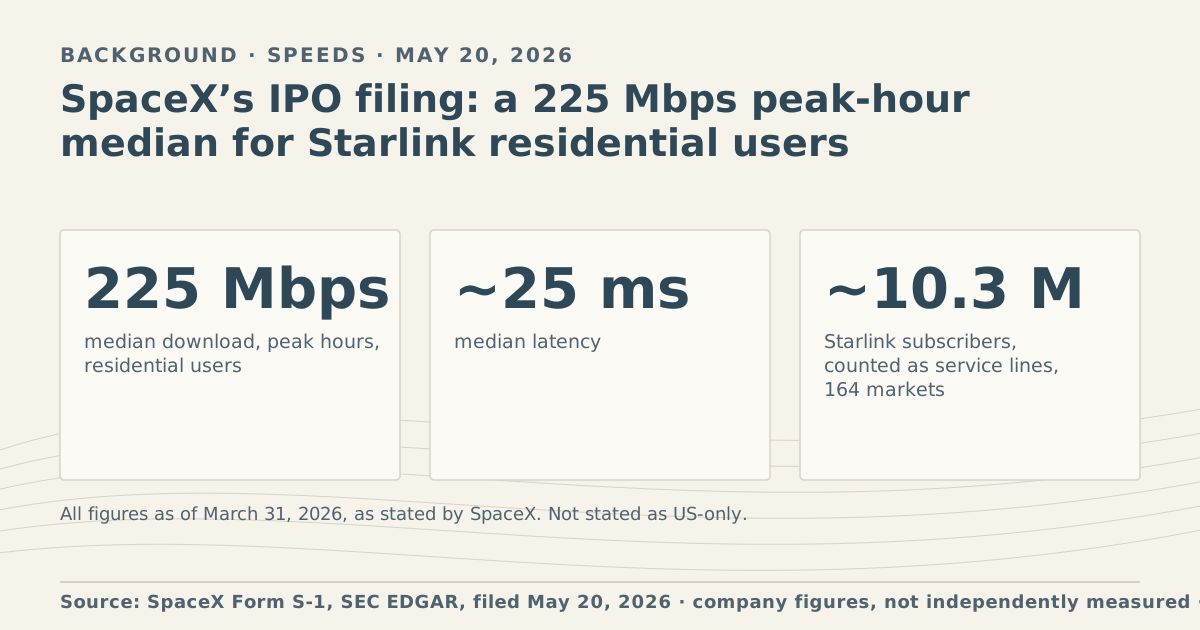
On May 20, 2026, SpaceX publicly filed its Form S-1 registration statement with the SEC ahead of its share listing. The filing gave Starlink performance and size figures, all as of March 31, 2026:
- “a median of 225 Mbps during peak hours for residential users”
- “median latency at approximately 25 milliseconds”
- “approximately 10.3 million Starlink Subscribers across 164 countries, territories, and other markets,” up about 105% from 5.0 million a year earlier
The filing defines a Starlink Subscriber as a service line, which it says “is distinct from the number of unique devices, account holders, end users, or physical persons.”
What it means for you
The figure comes from a securities filing, where company statements carry legal weight. It is a peak-hour median, which is the number that matters most for evening use. Half of residential users were below it and half above, so your own speed can sit well under it, especially on Residential 100 Mbps or 200 Mbps plans, which are capped below that figure by design.
The filing also says SpaceX expects to begin deploying V3 satellites on Starship in the second half of 2026, each “designed to offer one Tbps of downlink capacity,” and that “as network capacity increases” it expects to compete more in suburban and urban areas. Those are the same capacity limits behind sold-out areas and demand surcharges.
Who this covers
- Residential users of Starlink. The filing does not say the 225 Mbps median is US-only.
- The subscriber count is global and counts service lines, so one household with two subscriptions counts twice.
What you can check now
- Compare your own evening speed tests with your plan’s published range on our upload and download page, and see why evenings are slower.
- County medians appear on our speed explorer once 20 or more reader tests exist.
What stays the same
Starlink’s plan pages still publish typical ranges, not guarantees, and peak hours remain 6 pm to 11 pm local time in its help text. Nothing in the filing changes surcharge or sold-out rules.
How this fits the record
In July 2025 Starlink said the US median download at peak was “nearly 200 Mbps” (our item). The filing’s 225 Mbps figure is newer but its geographic scope isn’t stated, so the two aren’t a like-for-like comparison. Independent measurement from Ookla is in our September 2026 item.
What we don’t know yet
- Whether the 225 Mbps median is for the US, North America or all markets.
- How the median was measured (which customers, which hours, which method).
- How many of the 10.3 million service lines are in the US. The filing doesn’t break this out.
Our data
None yet for speeds. Company figures are never merged with crowd medians.
Source
Space Exploration Technologies Corp., Form S-1 registration statement · EDGAR filing date 2026-05-20; figures stated as of 2026-03-31
Retrieved Oct 6, 2026
Correction log
No corrections since publication.
Found an error? See corrections or contact. Fixes are made in place, dated and listed here.