NewsIncludes press-layer reports
- Event date (reported)
- Published
- Last updated
What changed
On September 28, 2026, SpaceX’s Starship Flight 14 lifted off from Starbase, Texas, became the first Starship flight to reach orbit, and deployed 26 Starlink V3 satellites. CircleID reported that deployment began about 35 minutes after launch and that all 26 had been released by 13:54 UTC. The mission ended earlier than planned after an engine problem; press accounts differ on how many orbits the ship completed, but agree the satellite deployment was finished.
These are the first V3 satellites put into orbit. The 20 V3 satellites on Flight 13 in July did not reach orbit and re-entered as planned (our item).
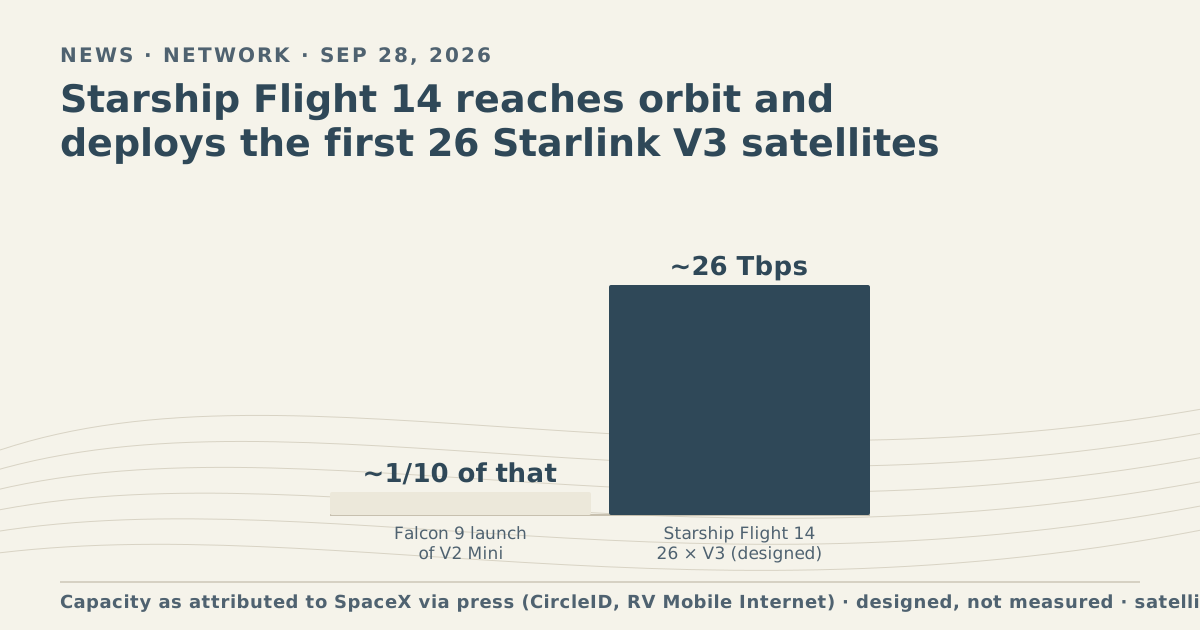
According to SpaceX, as reported by CircleID, “each V3 satellite is designed to add 1 terabit per second of capacity,” so the 26 satellites represent about 26 Tbps, “about 10 times what SpaceX says is added by a Falcon 9 launch carrying V2 Mini satellites.”
What it means for you
Nothing changes at your address yet. CircleID noted that the satellites still have to deploy antennas and solar arrays, set up their links, raise their orbits and finish checkout before they carry customer traffic.
Over time this is the change most likely to matter for sold-out areas and demand surcharges, because both come from local capacity running short. SpaceX said in its May 2026 filing that a single Starship launch could eventually carry up to 60 V3 satellites (our item); this flight carried 26.
Who this covers
- No customers directly yet. The satellites were in checkout when the reports were written.
What you can check now
- Your checkout at your real service address still decides whether a surcharge applies. Nothing about this launch changes that today.
- We log dated capacity changes on the sold-out log and surcharge changes on the surcharge timeline. If quotes in your county fall, report what you see.
What stays the same
Starlink’s surcharge rules, sold-out status and plan speed ranges. Customers today are served by earlier-generation satellites.
What we don’t know yet
- When these satellites will start carrying traffic, and how many will complete checkout.
- How much usable capacity they add over US areas with surcharges. Designed capacity, as CircleID put it, is not measured capacity.
- When the next V3 launch will fly. RV Mobile Internet’s article gives estimates for consumer gigabit service that SpaceX has not confirmed in a source we could read, so we don’t repeat them.
Our data
None.
Source
In a Dramatic Mission – SpaceX's Starship Delivers First 26 Starlink V3 Satellites to Orbit
Retrieved Oct 6, 2026
SpaceX Deploys First 26 Starlink V3 Satellites on Starship
Retrieved Oct 6, 2026
Correction log
No corrections since publication.
Found an error? See corrections or contact. Fixes are made in place, dated and listed here.